

Mood Disorder Treatment in Miami Lakes, FL
Some days you feel fine. Other days everything, your energy, your patience, your ability to just get through a normal afternoon, feels like it’s running on empty for no clear reason. If that swing has become a pattern instead of a one-off week, it might be more than stress. Mental Health First provides psychiatric evaluations, medication management, and ongoing mood disorder treatment at our Miami Lakes office, with telepsychiatry available across Florida. We help adults figure out what’s actually driving the shift, not guess at it, and build a treatment plan around the mood pattern you actually have.
WHAT IS A MOOD DISORDER?
A mood disorder is a mental health condition that affects your baseline emotional state in a way that goes beyond a bad day, a rough week, or a normal reaction to something hard in your life. It’s not about feeling sad after a loss or wired before a big deadline. Mood disorders involve a change in mood, energy, sleep, or motivation that sticks around, shows up without an obvious trigger, or swings between extremes, and starts interfering with work, relationships, or basic daily functioning. Depression is the one most people have heard of. Bipolar disorder is another. But “mood disorder” is really an umbrella term, and where you land on that spectrum changes everything about how treatment should look
Here’s the part people miss. Two people can both say “I think I have a mood disorder” and be describing almost opposite experiences. One person’s mood drops and stays low for weeks. Another person’s mood swings hard, from a flat, low stretch to a period of racing energy, barely sleeping, talking fast, taking risks they wouldn’t normally take. Same umbrella
Types of Mood Disorders We Treat in Miami Lakes
Major Depressive Disorder
A persistent low mood, loss of interest in things you used to care about, and changes in sleep, appetite, or energy that last most days for two weeks or longer.
Persistent Depressive Disorder (Dysthymia)
A lower-grade depression that doesn’t lift for years at a time. Often mistaken for personality or “just how I am,” since it never gets bad enough to send someone to the ER, but never really goes away either.
Bipolar I Disorder
Full manic episodes, sometimes with psychotic features, alternating with depressive episodes. The manic phase is intense enough to disrupt work, relationships, or judgment.
Bipolar II Disorder
A pattern of hypomania, a milder, shorter high, paired with depressive episodes that tend to last longer and hit harder than the highs.
Cyclothymic Disorder
Chronic, milder mood swings between low periods and elevated periods that don’t meet the full criteria for major depression or mania, but never really settle either.
Seasonal Affective Disorder
A depressive pattern tied to time of year, most often fall and winter, that lifts and returns on a predictable seasonal cycle.
Recognizing the Signs and Symptoms of Mood Disorder
- Nothing feels enjoyable anymore, not even things you used to love
- Getting out of bed takes everything you have some mornings
- Sleep is either impossible or all you want to do
- Small decisions feel like too much to handle
- You're irritable over things that never used to bother you
- Some days you can't explain why you feel this way at all
- Your mood shifts hard, and not always with a clear reason
- Some stretches you barely need sleep and still feel wired
- Racing thoughts that won't slow down
- Spending, talking, or taking risks more than usual
- Crashing hard right after a high, sometimes within days
- Family or friends noticed the shift before you did

How We Evaluate Mood Disorders in Miami Lakes
The first thing we do is slow down. A lot of people come in already convinced they know what’s wrong, depression, bipolar, “just anxiety”, and sometimes they’re right. Sometimes they’re not, and that gap is exactly where treatment goes sideways if nobody catches it. Our providers walk through your full history: when the mood changes started, how long episodes last, whether there’s ever been a high alongside the lows, and how all of it has affected your work, relationships, and sleep over time. That last piece matters more than people expect. A mood disorder that only shows up during a specific season looks completely different on paper than one that cycles every few weeks.
We also screen carefully for what mimics mood disorders, since anxiety, thyroid issues, sleep disorders, and substance use can all produce symptoms that look like depression or mood instability on the surface. If you’ve had prior testing, therapy notes, or a previous diagnosis, bring it. It helps us build an accurate picture faster instead of starting from zero. Once we know what we’re actually dealing with, we build your treatment plan around the real pattern, not a guess.
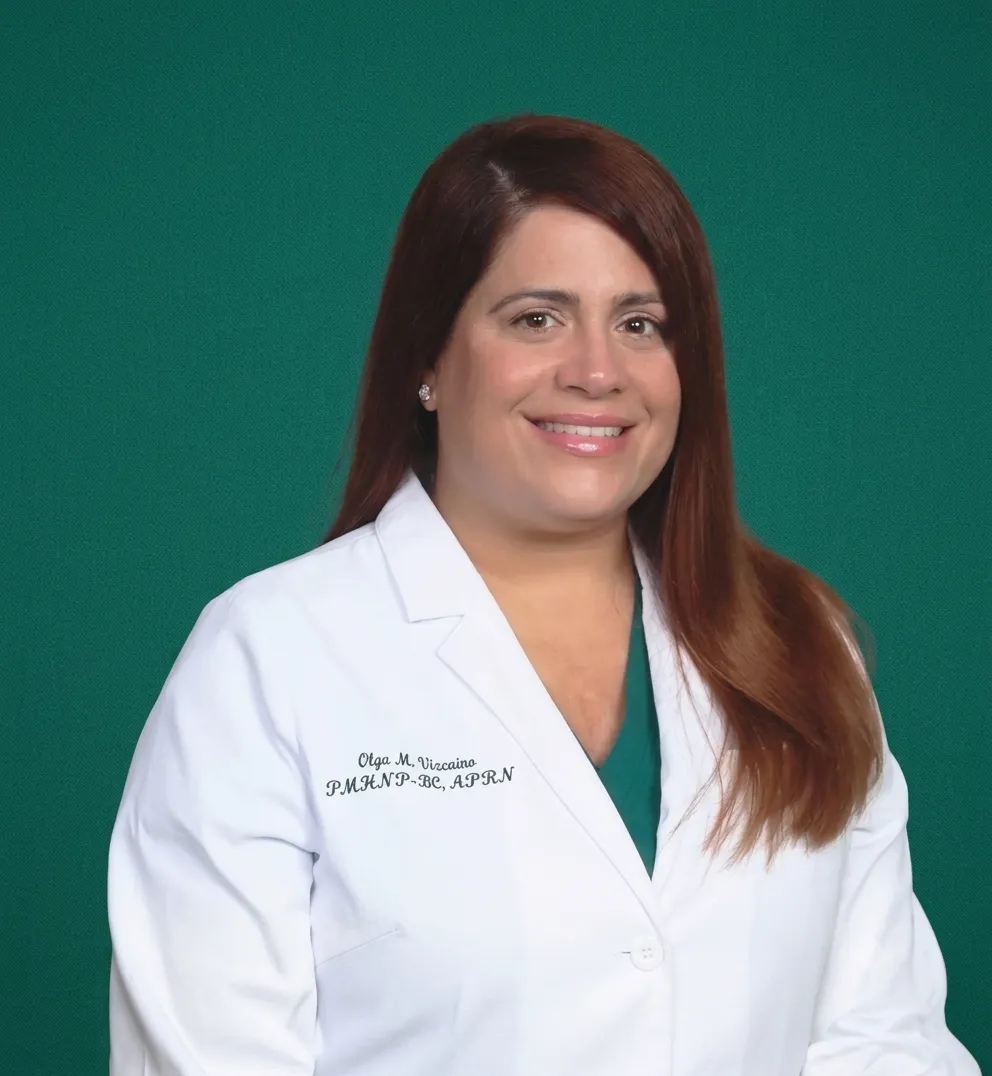
Meet Olga Vizcaino, PMHNP-BC
Ms. Olga Vizcaino is an experienced adult psychiatric and mental health nurse practitioner at Mental Health 1st, in Miami Lakes, FL. She offers both in-person and virtual care, combining clinical expertise with a thoughtful, patient centered approach. She earned her Bachelor’s degree and Master’s in Family Psychiatric and Mental Health Nursing from West Coast University in Miami.
Ms. Vizcaino provides comprehensive care for adults experiencing anxiety, depression, ADHD, PTSD, insomnia, and mood related concerns. Her approach emphasizes compassionate listening, open communication, and collaborative decision making, creating a calm and supportive space where patients feel heard and respected.
She focuses on understanding the whole person, not just symptoms, and develops tailored treatment plans designed to support emotional stability, daily functioning, and long term mental wellness. Ms. Vizcaino believes healing is about progress, and she is committed to empowering each patient throughout their mental health journey.
Ms. Olga Vizcaino proudly offers bilingual psychiatric care in English and Spanish.
Trusted by Patients.
Driven by Compassion.
EXCELLENT Based on 9 reviews
 Posted on Google

 ANGEL LORESMuy buena experiencia. Dr Olga Vizcaino es muy profesional. 100% recomendadaPosted on Google
 Orlando AlfonsoPosted on Google
 Damian VazquezPosted on Google
 Dayan VazquezPosted on Google
 Laiset MejiasPosted on Google
 Numancia VizcainoI felt heard and included in the desicion making of my treatment. I had a great experience.Posted on Google
 Magalis VizcainoPosted on Google
 Maria VeneroPosted on Google
 Deney Navarro

What Causes Mood Disorders and Who’s at Risk
Mood disorders aren’t caused by weakness, bad attitude, or not trying hard enough. There’s a real biological piece here. Brain chemistry, particularly how serotonin, dopamine, and norepinephrine are regulated, plays a direct role in mood stability. Genetics matter too. If a parent or sibling has had depression or bipolar disorder, your risk goes up, sometimes considerably. Hormonal shifts, chronic stress, major life changes, and certain medical conditions can all trigger or worsen an episode in someone already predisposed.
None of that means environment is irrelevant. Trauma, prolonged stress, poor sleep, and substance use can all pull a mood disorder to the surface earlier, or make episodes harder to manage once they start. What’s tricky is that a lot of adults spend years managing symptoms quietly. High-functioning depression, mild hypomania that just looks like “a really productive week,” a seasonal dip nobody questions because everyone feels a little worse in January. Eventually the coping strategies stop being enough, and that’s usually when people finally book an evaluation, not because the condition just appeared, but because it’s finally too loud to work around.
Mood Disorder Treatment Options at Mental Health First in Miami Lakes
Medication Management
Our Miami Lakes psychiatric providers prescribe and closely monitor mood stabilizers, antidepressants, and other medications, adjusting your treatment based on how you respond and what type of mood disorder you’re managing.
Ongoing Psychiatric Care
Mood disorders shift over time, sometimes with the seasons, sometimes with life circumstances. We schedule regular follow ups to track your symptoms, catch early warning signs of a new episode, and adjust your plan before things escalate.
In Person and Telepsychiatry Appointments
- See your provider in person at our Miami Lakes office, or connect virtually through secure telepsychiatry available across Florida, with same week appointments to help you start treatment sooner.
Why Choose Mental Health First for Mood Disorder Treatment in Miami Lakes
Getting the right diagnosis is the difference between a treatment plan that actually works and months of trial and error on medication that was never a fit for your pattern in the first place. At Mental Health First, we provide personalized psychiatric care with convenient in person appointments in Miami Lakes and secure telepsychiatry across Florida, with providers who take the time to figure out which mood disorder you’re actually dealing with before they prescribe anything.
DHD diagnosis can be the difference between years of frustration and finally understanding what’s actually going on. At Mental Health First, we provide personalized psychiatric care with convenient in person appointments in Miami Lakes and secure telepsychiatry across Florida, with providers who take your symptoms seriously from the first visit.
We don't treat every mood complaint the same way. Depression and bipolar disorder often need very different medications, so getting the diagnosis right, first, is where we start.
Moods shift with seasons, stress, and life changes. We adjust your plan as your pattern changes instead of locking you into a fixed dose that stops working.
We look at your full history, not just how you're feeling this week, so treatment addresses the cycle you're actually in, not just the symptom in front of us right now.
Insurance Accepted for Mood Disorder Treatment in Miami Lakes
We work with trusted insurance providers so you can access mood disorder treatment in Miami Lakes with minimal out of pocket cost. Navigating insurance shouldn’t be another thing on your plate to manage, which is why our team handles verification directly with your provider before your first appointment. If you’re unsure whether your plan covers psychiatric evaluations, medication management, or telepsychiatry visits, contact us and we’ll confirm your benefits so there are no surprise costs.










How Mood Disorder Treatment Works at Mental Health First
1. Book Your Evaluation
Schedule an appointment in person at our Miami Lakes office or virtually through telepsychiatry. Same week appointments mean you’re not stuck waiting weeks to be seen.
2. Get a Real Diagnosis
We walk through your full history, mood patterns, and any past treatment or records, so your diagnosis reflects the actual pattern you’re living with, not a five minute checklist.
3. Start Your Treatment Plan
Once we know what’s going on, we build a treatment plan around your specific mood pattern, with regular follow ups to adjust medication and track how you’re doing over time.
Start Mood Disorder Treatment in Miami Lakes Today
Complete the form below with your details, and a member of our team will get in touch with you shortly to discuss your needs and help schedule an appointment. Depending on your preference and availability, we can arrange either an in person appointment or a convenient virtual consultation.
Frequently Asked Questions
For many mood disorders, medication is one of the most effective treatment options, but it depends on your specific diagnosis and how severe your symptoms are. We’ll talk through what makes sense for you during your evaluation.
There’s no blood test for it. Diagnosis is based on a detailed conversation about your symptoms, how long they’ve lasted, whether you’ve ever had a high alongside the lows, and how they’ve affected your daily life. We may also rule out medical conditions that can mimic mood symptoms.
Yes, though it’s more common for a mood disorder to overlap with anxiety or another condition than for someone to have two separate mood disorders. A thorough evaluation helps sort out what’s actually driving your symptoms.
Not exactly. Depression, specifically major depressive disorder, is one type of mood disorder. Bipolar disorder, cyclothymic disorder, and seasonal affective disorder are also mood disorders, but each involves a different pattern and often needs a different approach to treatment.
A bad mood usually has a clear cause and passes within a day or two. A mood disorder involves a change in mood, energy, or sleep that lasts for weeks, shows up without an obvious trigger, or starts interfering with work and relationships. If it’s sticking around, it’s worth getting evaluated.
Genetics play a real role. Having a parent or sibling with depression or bipolar disorder increases your risk. That said, genetics alone don’t determine whether someone develops a mood disorder, environment and life circumstances factor in too.
It happens more than people think, especially with milder or seasonal patterns that never get bad enough to feel like an emergency. A lot of adults manage quietly for years before finally getting evaluated.
Most major insurance plans cover psychiatric evaluations and mood disorder treatment. Our team verifies your specific coverage before your first appointment so there are no surprises.
If your mood, energy, or sleep has been off for more than a couple of weeks, or if it’s starting to affect your work or relationships, the first step is talking it through with a qualified provider. An evaluation can tell you what’s actually going on and what treatment fits.
Related Services
We provide personalized, evidence-based psychiatric care for adults, offering expert evaluation, medication management, and treatment for a wide range of mental health conditions.