

Specific Phobia Treatment in Miami Lakes, FL
You know it’s irrational. That’s almost the worst part. Knowing a spider isn’t going to kill you, or that the plane is statistically safer than the drive to the airport, doesn’t do a thing to stop your hands from shaking or your chest from locking up the second you’re face to face with it. A specific phobia isn’t about logic. It’s a fear response that’s gotten stuck on repeat. Mental Health First provides psychiatric evaluations, medication management, and ongoing phobia treatment at our Miami Lakes office, with telepsychiatry available across Florida. We help adults understand what’s driving the fear and build a plan to shrink its hold on daily life, not just white-knuckle around it forever.
WHAT IS A SPECIFIC PHOBIA
Plenty of people don’t love spiders or heights. That’s not a phobia. A specific phobia is a fear so intense and so disproportionate to the actual danger that it takes over. Heart racing, breath short, a full body urge to get away, sometimes triggered just by the thought of the thing, let alone being near it. The fear isn’t a preference. It’s involuntary, and it’s exhausting to manage day after day, especially when the trigger is something most people barely think twice about, an elevator, a dog on a leash, a thunderstorm rolling in.
What separates a phobia from ordinary fear is how much it costs someone. Turning down a job because the office is on the 20th floor. Skipping a friend’s wedding because it’s out of driving distance and flying isn’t an option. Avoiding the dentist for a decade over a needle. The trigger itself might be small in the grand scheme of things, but the avoidance behavior built around it isn’t small at all. That’s usually what finally brings people in, not the fear itself, but how much of their life they’ve had to rearrange around it.
Type of Specific Phobias We Treat in Miami Lakes
Animal Type
Intense fear of specific animals or insects, dogs, spiders, snakes, birds, often traced back to a childhood experience but sometimes with no clear origin at all.
Natural Environment Type
Fear centered on elements of the natural world, heights, storms, water, darkness, that can limit travel, outdoor activity, or even where someone’s willing to live.
Blood-Injection-Injury Type
Fear of blood, needles, or medical procedures, often accompanied by a drop in heart rate or fainting, which makes it distinct from most other phobia types.
Situational Type
Fear tied to specific situations, flying, elevators, enclosed spaces, tunnels, that can make travel, certain jobs, or everyday errands feel impossible without major workarounds.
Other Specified Phobias
Fears that don’t fit neatly into the categories above, choking, vomiting, loud noises, costumed characters, still capable of significantly disrupting daily functioning.
Multiple or Complex Phobias
More than one specific phobia occurring together, which often compounds avoidance behavior and can make daily life feel like a constant series of workarounds.
Recognizing the Signs and Symptoms of Specific Phobia
- Heart pounding or chest tightening almost instantly
- Sweating, trembling, or feeling lightheaded
- An overwhelming urge to escape the situation immediately
- Freezing up or feeling unable to move or think clearly
- Nausea or a knot in your stomach
- Full blown panic if you can't get away right then
- Rearranging travel plans to avoid a trigger entirely
- Turning down jobs, events, or trips because of it
- Anxious for days or weeks just anticipating exposure
- Relying on someone else to handle things you can't face
- Feeling embarrassed or isolated because of the fear
- Avoidance that's grown bigger over time, not smaller

How We Diagnose Specific Phobias in Miami Lakes
Not every strong dislike is a phobia, and figuring out where that line sits is part of what an evaluation is for. We talk through what happens physically and mentally when you’re exposed to the trigger, how long the fear has been part of your life, and how much you’ve restructured your routine to avoid it. That last question tends to reveal more than people expect. Someone might say the fear is “not that bad,” and then describe years of turning down flights, avoiding entire neighborhoods, or never going to the doctor.
We also check for anything that commonly overlaps with specific phobias, other anxiety disorders, panic attacks triggered by the phobic object, or a past traumatic experience connected to the fear. Getting that context matters, because a phobia that grew out of a specific incident sometimes calls for a different approach than one that’s been present as far back as someone can remember. Once we’ve got the full picture, we build a treatment plan around the phobia you actually have, not phobias in general.
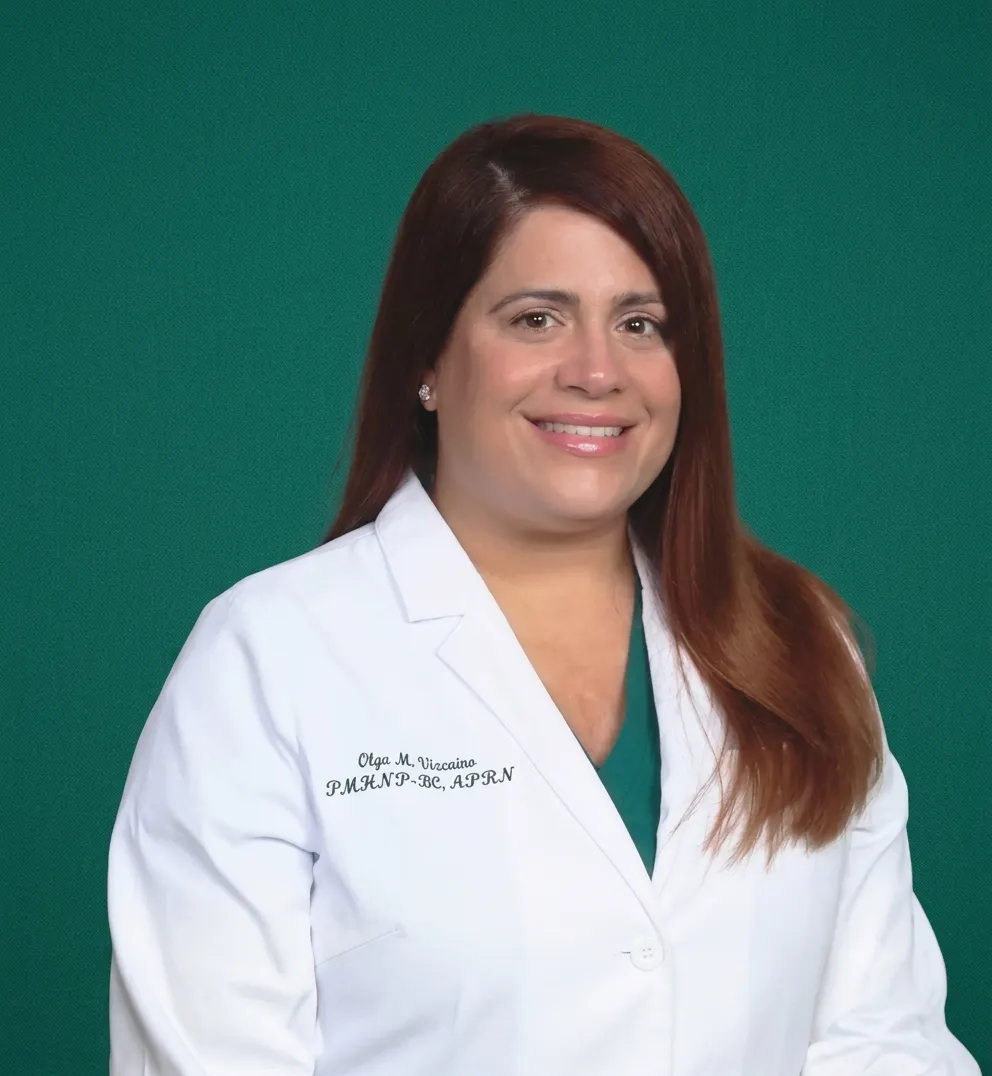
Meet Olga Vizcaino, PMHNP-BC
Ms. Olga Vizcaino is an experienced adult psychiatric and mental health nurse practitioner at Mental Health 1st, in Miami Lakes, FL. She offers both in-person and virtual care, combining clinical expertise with a thoughtful, patient centered approach. She earned her Bachelor’s degree and Master’s in Family Psychiatric and Mental Health Nursing from West Coast University in Miami.
Ms. Vizcaino provides comprehensive care for adults experiencing anxiety, depression, ADHD, PTSD, insomnia, and mood related concerns. Her approach emphasizes compassionate listening, open communication, and collaborative decision making, creating a calm and supportive space where patients feel heard and respected.
She focuses on understanding the whole person, not just symptoms, and develops tailored treatment plans designed to support emotional stability, daily functioning, and long term mental wellness. Ms. Vizcaino believes healing is about progress, and she is committed to empowering each patient throughout their mental health journey.
Ms. Olga Vizcaino proudly offers bilingual psychiatric care in English and Spanish.
Trusted by Patients.
Driven by Compassion.
EXCELLENT Based on 9 reviews
 Posted on Google
 ANGEL LORESMuy buena experiencia. Dr Olga Vizcaino es muy profesional. 100% recomendadaPosted on Google
 Orlando AlfonsoPosted on Google
 Damian VazquezPosted on Google
 Dayan VazquezPosted on Google
 Laiset MejiasPosted on Google
 Numancia VizcainoI felt heard and included in the desicion making of my treatment. I had a great experience.Posted on Google
 Magalis VizcainoPosted on Google
 Maria VeneroPosted on Google
 Deney Navarro
What Causes Specific Phobias and Who’s at Risk
Sometimes a phobia has an obvious origin. A dog bite in childhood, a bad flight, a medical procedure that went wrong. Other times there’s no clear event at all, and the fear seems to have just always been there. Both are common, and both are legitimate. Genetics and temperament play a role too, some people are simply wired with a more reactive fear response, and that sensitivity can run in families right alongside anxiety and panic disorder.
What tends to turn a fear into a full phobia is avoidance. Every time someone sidesteps the trigger, the brain quietly logs that avoidance as the thing that kept them safe, which reinforces the fear instead of letting it fade. Over months and years, that loop tightens. The phobia doesn’t need a new reason to keep going, the avoidance itself becomes the reason. That’s part of why phobias that started small in childhood sometimes grow noticeably worse by adulthood, even without anything new happening to trigger it.
Specific Phobia Treatment Options at Mental Health First in Miami Lakes
Medication Management
Our Miami Lakes psychiatric providers prescribe medications that can help manage acute anxiety around specific triggers or situations, adjusting your plan based on how you respond.
Ongoing Psychiatric Care
We schedule regular follow ups to track how you’re responding to treatment, address any new triggers or setbacks, and adjust your plan as your comfort with exposure improves.
In Person and Telepsychiatry Appointments
See your provider in person at our Miami Lakes office, or connect virtually through secure telepsychiatry available across Florida, with same week appointments to help you start treatment sooner.
Why Choose Mental Health First for Specific Phobia Treatment in Miami Lakes
A lot of people live with a specific phobia for years without ever mentioning it to a provider, because it feels small compared to what other patients are dealing with. It isn’t small if it’s been shaping your decisions for years. At Mental Health First, we provide personalized psychiatric care with convenient in person appointments in Miami Lakes and secure telepsychiatry across Florida, with providers who take phobias seriously instead of treating them as something to just tough out.
Animal phobias, situational phobias, and blood-injection-injury phobias don't respond to identical treatment. We build your plan around the phobia you actually have.
Avoidance is often what keeps a phobia going. We help you work toward getting your life back from around the trigger, at a pace that actually fits you.
Phobias often overlap with panic attacks or generalized anxiety. We look at the full picture so your treatment covers more than just the one fear.
Insurance Accepted for Specific Phobia Treatment in Miami Lakes
We work with trusted insurance providers so you can access specific phobia treatment in Miami Lakes with minimal out of pocket cost. Navigating insurance shouldn’t be another thing on your plate to manage, which is why our team handles verification directly with your provider before your first appointment. If you’re unsure whether your plan covers psychiatric evaluations, medication management, or telepsychiatry visits, contact us and we’ll confirm your benefits so there are no surprise costs.










How Specific Phobia Treatment Works at Mental Health First
1. Book Your Evaluation
Schedule an appointment in person at our Miami Lakes office or virtually through telepsychiatry. Same week appointments mean you’re not stuck waiting weeks to be seen.
2. Get a Real Diagnosis
We walk through your specific fear, how long it’s been present, and how much avoidance behavior has built up around it, so your plan reflects your actual experience.
3. Start Your Treatment Plan
nce we know what’s going on, we build a treatment plan around your specific phobia, with regular follow ups to track progress and adjust as things improve.
Start Specific Phobia Treatment in Miami Lakes Today
Complete the form below with your details, and a member of our team will get in touch with you shortly to discuss your needs and help schedule an appointment. Depending on your preference and availability, we can arrange either an in person appointment or a convenient virtual consultation.
Frequently Asked Questions
Not always. Many people manage specific phobias effectively with therapy-based approaches, particularly gradual exposure. Medication is sometimes used to manage acute anxiety around a trigger, but it’s not the default for every case.
Yes. While many phobias start in childhood, it’s entirely possible to develop one later in life, sometimes after a specific triggering event, sometimes without an identifiable cause at all.
A fear is a normal reaction that fits the situation and fades once it’s over. A phobia is disproportionate to the actual danger, hard to control, and often leads to avoidance behavior that starts affecting daily life.
Animal phobias, heights, and situational fears like flying or enclosed spaces are among the most common, but any specific fear that’s disproportionate and disruptive can qualify as a phobia, no matter how uncommon the trigger.
Some mild phobias fade over time on their own, especially if someone naturally encounters the trigger and it goes fine. But when avoidance has taken hold, phobias tend to persist or worsen rather than resolve without help.
Effective treatment for phobias often does involve some form of gradual, controlled exposure, but it’s paced to your comfort level, not forced. We’ll talk through an approach that makes sense for you specifically.
Most major insurance plans cover psychiatric evaluations and treatment related to specific phobias. Our team verifies your specific coverage before your first appointment so there are no surprises.
An evaluation usually includes a discussion of your specific trigger, how long it’s affected you, what avoidance behaviors you’ve developed, and whether anything else, like panic attacks or generalized anxiety, is happening alongside it.
Yes. It’s common for exposure to a phobic trigger to bring on a full panic attack, complete with a racing heart, shortness of breath, and an urge to escape immediately.
Related Services
We provide personalized, evidence-based psychiatric care for adults, offering expert evaluation, medication management, and treatment for a wide range of mental health conditions.